· 7 min read
The route changes the road
SUMO confronted the feedback between route choice and congestion in its earliest design, then made routing and simulation correct each other through an explicit iterative toolchain.
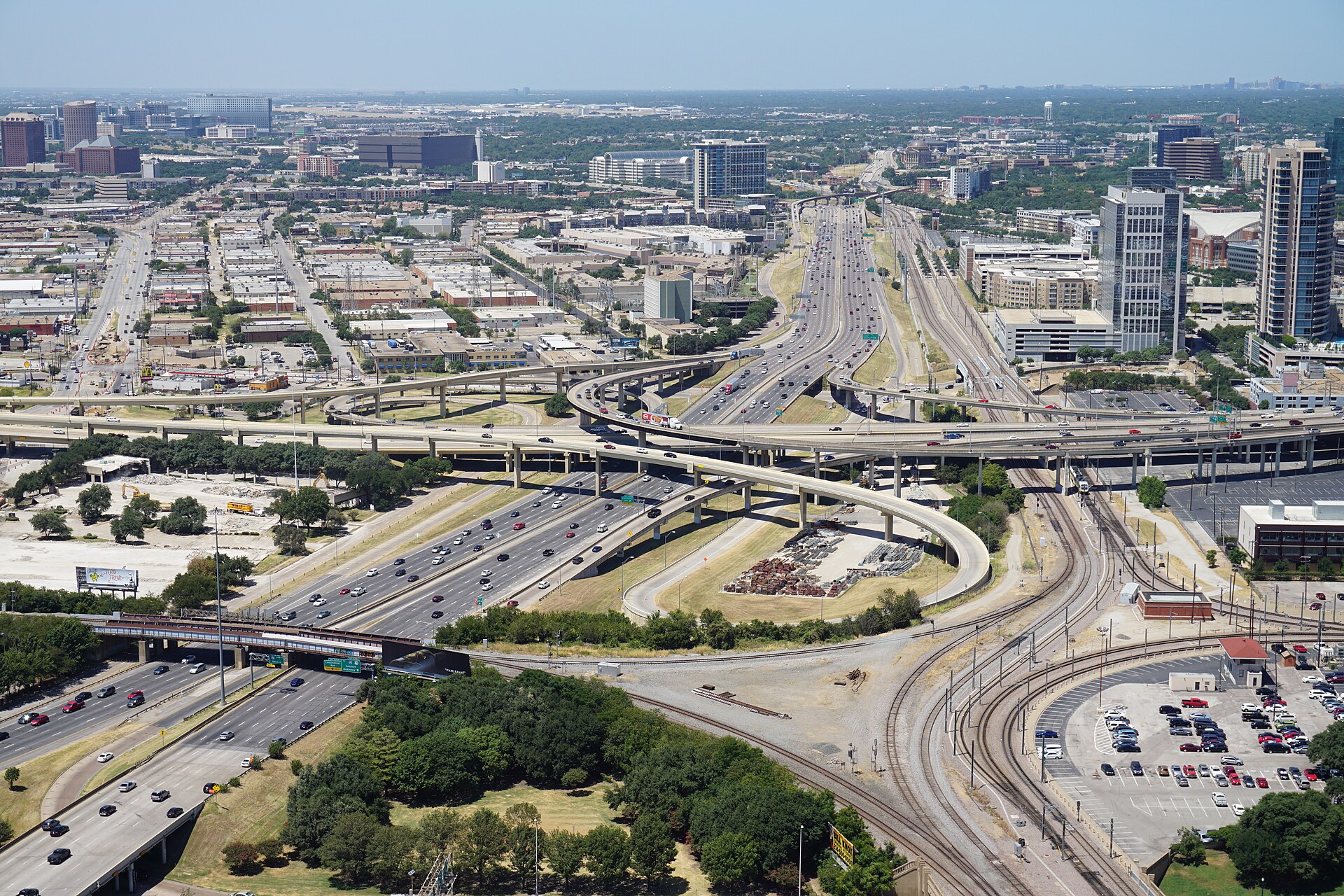

I opened SUMO's 2002 paper expecting a museum piece: blocky road diagrams, a benchmark from a 933 MHz Pentium, and a graphical interface still listed as future work. The first page stopped me before any of that. Drivers choose departure times and routes partly because of network load, the authors explain, while those choices create the load they were responding to.
SUMO development had begun only two years earlier. Yet the paper already treated that feedback as the central modeling problem, instead of postponing it until the simulator worked. Its proposed answer was to route vehicles, simulate the resulting traffic, measure the changed travel times, and route them again. The route planner had to become part of the traffic it predicted.
That decision still shapes the project. The current toolchain remains split across a router and a simulator, with an iterative script feeding each simulation's measured travel times back into the next routing pass.
The shortest route lies#
A shortest-path algorithm needs edge costs. For a road network, those costs include travel time, and SUMO's current dynamic user assignment guide points out the circular dependency plainly: travel time depends on how many vehicles use the edge, which remains unknown until the assignment has been simulated.
Give every driver the fastest route through an empty network and the answer invalidates itself. The bottleneck fills, its travel time rises, and a previously slower alternative may become the better choice. Of course the first iteration jams — every car received the same private shortcut.
Guess
Route on free-flow costs
The first pass treats every edge as though the network were still empty.
Load
Run every vehicle
SUMO turns those choices into queues, delays, and missed green lights.
Measure
Write experienced costs
Observed edge travel times replace the optimistic first estimate.
Repeat
Choose routes again
Probabilities and memory keep the whole population from switching at once.
Repetition alone would produce a different mess. If every vehicle abandons route A for route B after one bad run, B becomes the next jam and the population can slosh back again. SUMO keeps alternative routes and adjusts their probabilities with methods such as Gawron, Logit, or successive averages. Those algorithms differ in how quickly they let the newest measurement override what the earlier runs suggested.
The target is a dynamic user equilibrium: after the assignment settles, an individual vehicle cannot lower its own expected cost by changing routes. That definition matters because SUMO is solving for the choices travelers make, and those choices have to hold up inside the traffic they collectively cause.
The loop became the architecture#
The early team could have placed network import, route generation, vehicle movement, and output behind one executable. Instead, the project history says the first command-line versions were divided into separate applications. A network converter built the graph, a router assigned trips, and the simulator loaded the result. Purpose-specific data structures kept each program smaller and made individual parts replaceable, though the same page admits that the split is less comfortable for users.
I assumed the present implementation would hide a grand equilibrium solver behind that toolchain. Then I opened duaIterate.py and found an ordinary loop orchestrating two binaries. The important lines are almost rude in their simplicity:
for step in range(options.firstStep, options.lastStep): cfgname = writeRouteConf(...) ret = call([duaBinary, "-c", cfgname], log) sumocfg = writeSUMOConf(...) ret = call([sumoBinary, "-c", sumocfg], log)Each step writes a routing configuration, runs duarouter, writes a simulation configuration, and runs sumo. The next routing pass reads travel-time dumps produced by the previous simulation. Numbered directories preserve the route files, logs, edge costs, and summaries from every attempt.
The current script dates its header to February 13, 2008. Six years earlier, Daniel Krajzewicz, Georg Hertkorn, Peter Wagner, and Christian Rössel had already described the repeated route-and-simulate approach in their 2002 SUMO paper. The files and options have multiplied since then, while the handoff between route choice and observed congestion remains the same.
That visibility was part of the open-source argument too. The paper criticizes commercial traffic simulators whose internal models could not be examined or extended. Splitting SUMO into tools made the seams inconvenient, but it also gave researchers places to replace a router, import another network format, or inspect the costs passed between stages.
Convergence has a file system#
Every iteration writes another batch of routes, logs, and measured costs, so long runs accumulate storage quickly. SUMO's documentation warns that iterative assignment can consume copious disk space, and the default run performs fifty iterations. Some scenarios continue producing different results after a thousand. I have not reproduced a city-scale thousand-iteration run; I am taking the maintainers' warning at face value, and the directory layout makes it easy to believe.
Early passes are especially ugly because free-flow costs concentrate vehicles on the same routes. The tooling offers several ways to soften the shock: ramp demand up over iterations, remember older edge weights, discourage abrupt route switching, or begin from an existing assignment. Configuration decides how much influence an older observation retains in the next run.
The loop is also stubbornly sequential. The current guide says duaIterate.py has no parallelization path, because each simulation produces the costs required by the next routing pass. Even the measurements have a resolution problem: an average edge travel time can understate congestion that affects one turning movement but not another, and the routing pass that reads the average never learns which turn was the slow one.
These rough edges are the downside of meeting the feedback head on. SUMO exposes knobs for route probability, cost memory, pessimism, convergence deviation, and marginal costs because scenarios respond differently to new measurements. A sealed optimizer could offer one green button. The button would choose those policies on your behalf and leave fewer clues when the assignment oscillated.
Everybody can be locally right#
User equilibrium has a nasty property: every driver can be unable to improve their own route while the network remains worse than it could be for everyone together. SUMO therefore also supports an approximation of system-optimal assignment, where routes include the marginal delay a vehicle imposes on others. The same roads and trips produce a different answer because the objective has changed.
| User equilibrium | System optimum | |
|---|---|---|
| Objective | No traveler can improve their own expected trip | Lower total cost across the network |
| Edge cost | The travel time that driver experiences | Experienced travel time plus delay imposed on others |
| Driver's choice | The fastest route available to that vehicle | Some vehicles absorb a slower route |
| Tradeoff | Individually stable while total delay may remain high | Needs a controller and a decision about who yields |
Current tooling can even mix the two populations, treating some vehicles as ordinary travelers seeking their own fastest route and others as centrally controlled vehicles pursuing lower total cost. That feature turns an old modeling loop into a contemporary question about navigation apps, fleet control, and who gets asked to absorb a slower trip for the network's benefit.
I like that SUMO makes “optimal routing” incomplete until you name the objective. Optimal for one driver, for average travel time, for emissions, or for a controller with authority over only part of the fleet? The simulator can calculate several versions, but the developer still has to state which inconvenience belongs to whom.
When duaIterate.py finishes its default run, the working directory is lined with 000/ through 049/. Each folder holds a route plan, the traffic it created, and measurements that made the next folder necessary. The final assignment sits beside forty-nine earlier answers, each followed by a traffic run that showed where its cost map had lied.