Still Brook.

Latest essay
What happens when you cancel a photo import?
One open file, a tray of half-made thumbnails, and two names for the same pixels. Three things programming languages can now help us keep straight.
Read the essay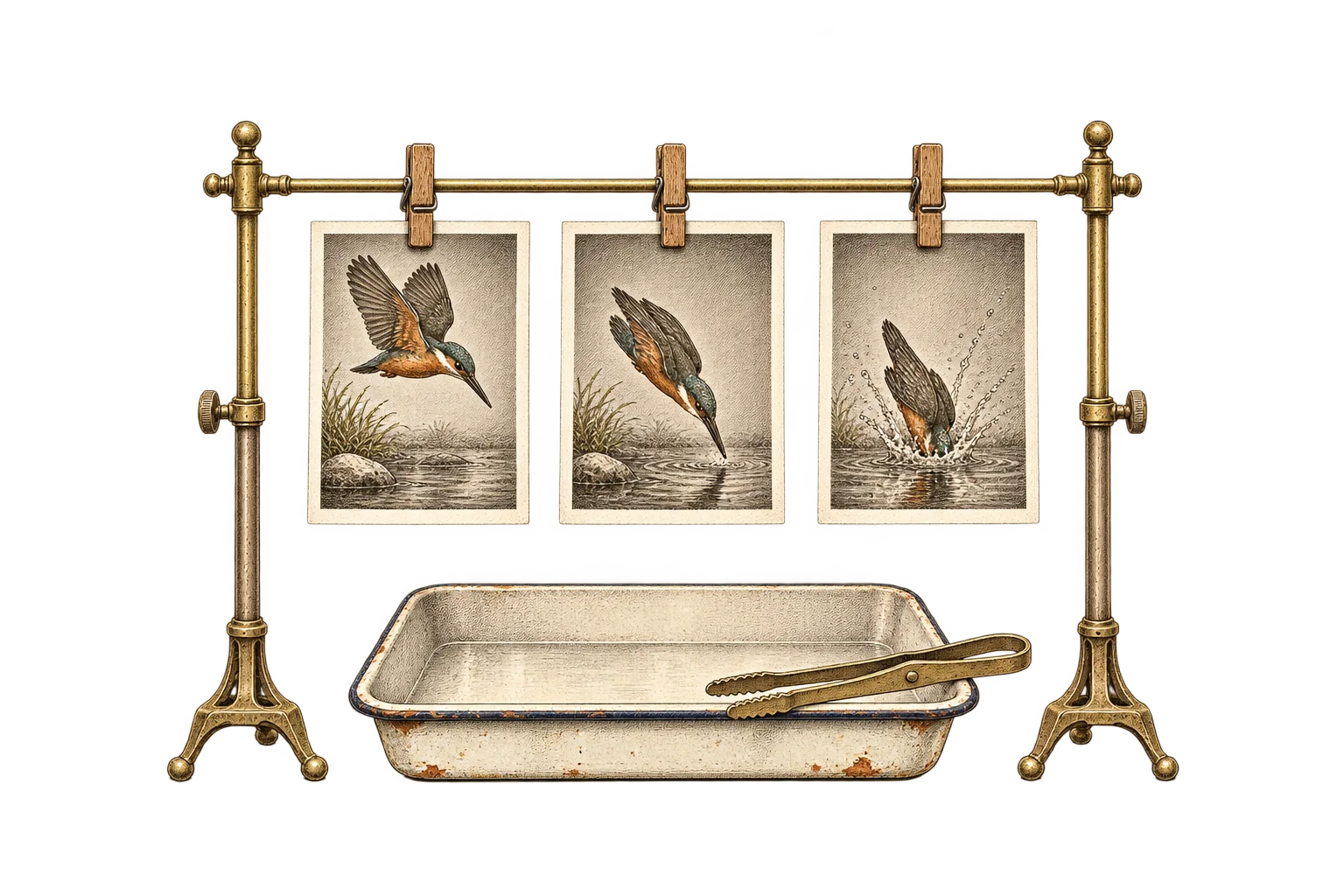
Pages from the notebook
106 of 132 essays
106 essays found. Page 3 of 9.
Warnings are build policy
Cargo 1.97 can deny warnings for local packages without smuggling CI policy through RUSTFLAGS into every rustc invocation.
The page is the work unit
Go 1.26's Green Tea garbage collector gets faster by queuing heap pages instead of individual objects, letting physical locality shape a graph traversal that used to fight the CPU.
The browser should move focus
Chrome 150 turns roving tabindex into a focusgroup primitive, putting arrow-key movement, tab-stop memory, and writing-mode rules where application code has been impersonating the browser.
Refs should stop being files
Git 3.0 plans to make reftable the default reference store, demoting the filesystem layout that tools have spent years mistaking for Git's branch API.
The textarea can measure itself
Firefox 152 closes the last major-browser gap for CSS field-sizing, so ordinary textarea autosize handlers can give layout back to the browser.
Packages should arrive inert
npm 12 separates fetching a dependency from granting its install script permission to execute, and records that permission where a reviewer can see it.
A gazillion tokens later
Prompting becomes productive when a vague idea collapses into a small building block with a chosen quality, a reference point, a harness, and a finish line.
Numbers are sets
Numeric types become practical when they denote sets of machine integers, letting guards intersect them and arithmetic map them while successor encodings remain available for induction.
Conservative to the token
The agent harness primitives that survived the last year are the ones you can read off deprecation notices: a loop with no limits, a frozen tool set, a markdown file, and a transcript on disk.
The language lives in the prelude
Ducklang implements structs, attributes, derivation, and protocol dispatch as compile-time Duck code over a smaller set of privileged compiler operations.
The IR has a front door
Gpufuck frontends author Functional Surface objects, pack them into a versioned WebGPU transport, and receive numeric resolved Core only after GPU checking.
A compiler made of resumable lanes
Gpufuck turns functional-language semantics into bounded GPU state machines, batches independent programs across lanes, and reads resolved Core back to emit ordinary WebAssembly on the host.
A note in the margin
A little curiosity goes a long way.
Still Brook is an independent journal about software, systems, and the quiet decisions that shape what we make.